Is Evangelism Dead?
- Sam Peters
- Mar 2
- 5 min read

“All authority in heaven and on earth has been given to me. Therefore go and make disciples of all nations…”— Matthew 28:18–20 (NIV)
Have you noticed a drop in your church’s numbers?
Fewer baptisms.
Less response to altar calls.
Fewer new guests showing up for events.
You planned the outreach.
You preached the series.
You prayed for results.
And nothing obvious happened.
So, the question quietly surfaces:
Has evangelism stopped working?
Or have our methods stopped connecting?
I know the discouragement. I’ve felt it myself.
But maybe evangelism isn’t dead.
Maybe it’s being refined.
What Is Evangelism?
If you grew up in the 70s or 80s like I did, evangelism often meant Saturday morning door knocking. We memorized the Roman’s Road. We quoted the Four Spiritual Laws. Sunday services ended with long altar calls—sometimes all 81 verses of “Just As I Am.”
Those methods shaped many of us.
But evangelism was never meant to be a program, an event, or a personality-driven sermon style.
Evangelism is proclaiming and embodying the Good News of Jesus.
It is not merely presenting information.
It is inviting transformation.
Programmatic evangelism worked in a culture where most people already had a biblical framework. Today’s culture is different. Trust must be built before truth can be received.
Evangelism must be a culture before it becomes a campaign—a way of life before it becomes a strategy.
Why Does Evangelism Feel Dead?
1. The Decline of Cultural Christianity
For decades, church attendance was part of American rhythm. In 1972, about 90% of Americans identified as Christian. Today, that number has dropped dramatically. According to Pew Research, nearly 30% of Americans now identify as religiously unaffiliated—the “Nones.”
We no longer live in a culture that assumes biblical literacy. Many people have never read the Gospels. They don’t reject Christianity because they’ve studied it—they often reject a caricature of it.
The mission field is no longer overseas.
It’s across the street.
2. Suspicion Toward Institutions
We also live in a time of deep institutional distrust. Scandals, political entanglements, and social media outrage cycles have left many wary of organized religion.
When someone hears “church,” they may think:
Hypocrisy
Judgment
Irrelevance
Before we ever speak the Gospel, we must overcome assumptions.
That takes time.
That takes proximity.
That takes relationship.
3. Method Fatigue
Attractional models are producing diminishing returns. Event-based evangelism without long-term relational follow-up often results in momentary excitement but little lasting discipleship.
Churches are exhausted from chasing the next big idea—another program, another campaign, another conference—only to end up right where they started.
We confuse activity with impact.
4. Internal Drift
Perhaps most concerning is internal drift.
As attendance declines, churches often shift from mission to survival. We circle the wagons. We protect what we have. We measure maintenance instead of multiplication.
We also fear cultural backlash. In a world where a few sentences online can ignite controversy, it feels safer to stay quiet.
So, we keep our heads down.
And evangelism begins to feel like a relic of another era.
The Truth: Evangelism Is Not Dead — It’s Changing
The Gospel has not lost its power.
The Holy Spirit is still drawing people.
We’ve seen revival movements break out on college campuses. We’ve watched pockets of awakening emerge in unexpected places. People are spiritually hungry—just differently than before.
What’s changing?
There is a shift happening:
From platform-centered evangelism to table-centered evangelism.
From mass appeal to meaningful relationships.
From public persuasion to personal witness.
And that shouldn’t surprise us.
It’s exactly how Jesus ministered.
He met people at wells.
He dined in homes.
He walked dusty roads.
In The Kitchen Table Gospel, I write about how transformation often happens across ordinary tables. Conversation. Listening. Hospitality. Presence. The Gospel spreads best when it is embodied before it is explained.
Why Small Churches Are Perfectly Positioned
Here’s the encouraging part for smaller congregations:
You are uniquely suited for this moment.
Small churches excel at relationships.
In a small town, the grocery store becomes a ministry opportunity. The barbershop becomes a listening post. The local diner becomes a discipleship hub.
Relational evangelism thrives in proximity.
This aligns beautifully with what I call the Ecclesial Minimum—where worship, community, and mission overlap. Evangelism doesn’t stand apart from the church’s life; it flows from shared life.
Micro-church models reflect this shift as well. They are built around relationships, not production. They prioritize conversation over performance. They make space for discipleship in living rooms, coffee shops, and neighborhoods.
This isn’t a downgrade from big-stage ministry.
It’s a return to Acts.
Why Relational Evangelism Works Today
It Teaches Us to Listen
We begin by hearing people’s stories before telling ours. In a culture allergic to being “sold,” listening builds credibility.
It Builds Trust
Institutions may be distrusted—but people trust people. When someone knows you care about them apart from their conversion, walls come down.
It Leverages Your Story
Your God-story is the easiest sermon you will ever preach—because you know it by heart. No memorized script required. Just authentic testimony.
It Embodies the Gospel
Jesus said:
“By this everyone will know that you are my disciples, if you love one another.” (John 13:35)
When our love is visible, the Gospel becomes tangible.
It Demonstrates Integrity
Consistency matters. When your life aligns with your message—when your neighbors see patience, kindness, generosity—the credibility of Christ increases.
It Clarifies the Mission
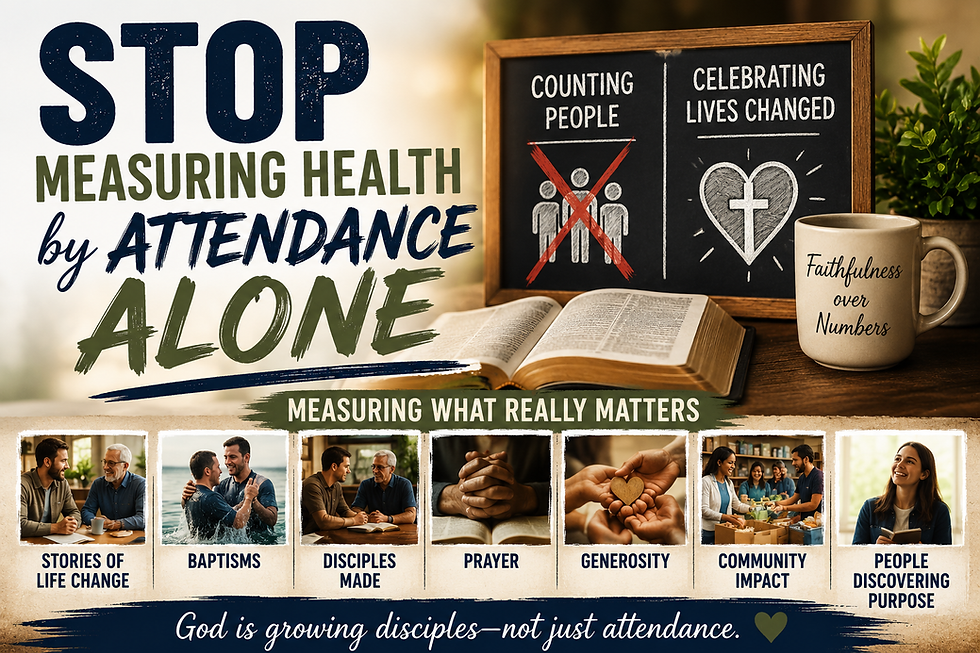
Relational evangelism shifts the church’s focus from “How do we grow attendance?” to “How do we make disciples?”
That shift changes everything.
A Hopeful Word to Pastors
Don’t confuse method failure with mission failure.
The tools may need updating. The message does not.
Help your people rediscover everyday witness. Model it yourself.
Get out of your office.
Have coffee with someone new.
Invite neighbors over.
Celebrate spiritual conversations.
Measure faithfulness before fruit.
And remind your church: we are not called to be impressive. We are called to be faithful.
Evangelism Isn’t Dead — It’s Being Reborn
The Gospel is still Good News.
The Spirit is still moving.
The harvest is still ready.
It may just look different than it did in 1985.
What if evangelism isn’t dead in your church?
What if it’s waiting to be rediscovered?
Let’s Continue the Conversation
Let me ask you a question:
Does your church have evangelism as a program… or as a culture?
If you’re unsure, that’s not failure. That’s an opportunity.
I’m offering a free one-hour consultation to help you evaluate where your church stands and how you can cultivate a culture of relational evangelism in your context.
You don’t need another program.
You need clarity of mission.
Reach out through the Services page at SmallChurchCoaching.com and schedule your free session.
And I’d love to hear from you—what evangelism efforts are working in your community right now?
If this article encouraged you, share it with another pastor.
Follow me on social media.
Subscribe to the website for resources.
And join me each week on Worship Rising as we continue equipping the local church to make disciples.
For a deeper dive into relational evangelism, check out my book The Kitchen Table Gospel.
Evangelism isn’t dead.
It’s being reborn—one conversation at a time.


Comments