Why Smaller Churches Can Win the Trust Crisis
- Sam Peters
- Aug 17
- 4 min read

"Because we loved you so much, we were delighted to share with you not only the gospel of God but our lives as well." – 1 Thessalonians 2:8 NIV
People are searching for something they can trust.
Every day we are bombarded by advertisements, opinions, headlines, and social media posts competing for our attention. There is no shortage of voices telling us what to believe, where to go, or how to live. In the middle of all that noise, something remarkable still happens.
People continue to trust authentic relationships. And that is good news for every small church.
One of the first questions I ask churches when I begin consulting with them is, "What do you love most about your church?" The answer, by a wide margin, is almost always the same.
"We're like a family."
I smile every time I hear it because that's not a weakness to overcome. It's one of the greatest strengths a small church possesses.
For years, many smaller congregations have quietly wondered how they could compete with larger churches that have bigger budgets, larger staffs, and more visible ministries. Yet the greatest strength of a small church has never been found in its resources. It has always been found in its relationships.
Ministry Begins with Knowing Names
One of the first things visitors often notice in a healthy small church is that people know one another. They know names, birthdays, where you work, and what matters most to you. They know when you’ve been absent. They know who is recovering from surgery and whose grandchild just graduated from high school.
This isn't because someone entered the information into a database. It's because people genuinely know and care about one another.
Jesus demonstrated this kind of ministry throughout the Gospels. He didn't simply teach crowds. He called people by name. He noticed Zacchaeus sitting in a tree. He invited Himself into the homes of ordinary people. He walked with His disciples day after day until friendship became the foundation of discipleship.
Relationships have always been central to the Kingdom of God.
Families Notice Genuine Care
One of the greatest compliments a church can receive isn't, "Your music was amazing." It's hearing someone say, "When we were going through a difficult season, your church was there for us."
People remember who celebrated with them during a major life milestone. They remember who visited with them after surgery, who brought the meals after the baby was born, who prayed with them after a loved one passed away.
Those moments rarely make headlines, but they build trust one act of kindness at a time.
Authentic Community Is Becoming Increasingly Valuable
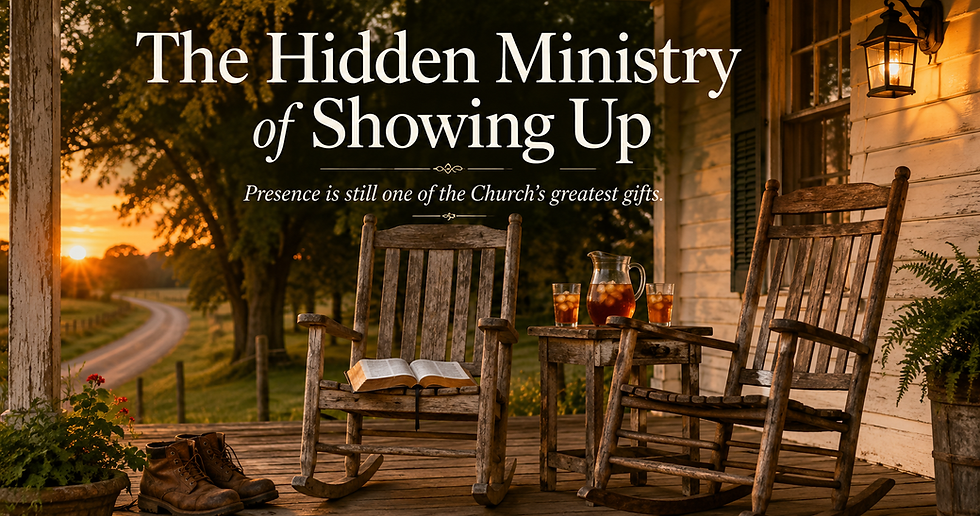
Many people today have hundreds of online connections yet still long for genuine friendship. They’re looking for a place where someone notices them when they walk through the door, a place where conversations continue after worship has ended. They long for a place where faith is discussed around the kitchen table, or over coffee, or on the front porch while sipping a glass of iced tea.
You can’t program that kind of connection. That kind of community cannot be manufactured. It grows naturally as people share life together.
This is one of the reasons I have always believed in what I call The Kitchen Table Gospel.
Some of the most meaningful spiritual conversations happen long before anyone steps into a sanctuary. They happen where people feel comfortable enough to ask honest questions and share real burdens. Around a table, barriers begin to fall and trust begins to grow.
Personal Discipleship Is the Small Church's Superpower
Jesus spent most of His earthly ministry investing deeply in a relatively small group of people. Yes, He preached to crowds, but He formed disciples through relationships. That kind of evangelism and disciple-making still works today.
The one-on-one conversations, walking alongside others through good times and bad, praying together, and encouraging one another are the kinds of ministries where smaller churches often thrive.
In Evangelism for Introverts, I wrote that people are not projects to complete; they are people to love.
That simple truth changes everything.
When we stop trying to win arguments and begin building friendships, people become more willing to explore faith because they know they are genuinely loved.
Don't Try to Become Someone Else
Smaller churches don't need to imitate larger churches in order to make a significant Kingdom impact. God has already given them gifts that many communities desperately need – personal connections, pastors who know your story, church members who notice your absence, true friends that will pray for you around a kitchen table. People are drawn to churches that share not only the Gospel, but their lives as well. This is the strength of a smaller church—authentic relationships.
Trust Is Built One Relationship at a Time
Healthy churches don't simply gather crowds, they cultivate trust.
That trust grows through faithful presence, consistent care, honest conversations, and authentic love. We do that every time we share a meal, visit the sick in the hospital, share a cup of coffee, and pray around the kitchen table. We do that with every conversation after worship. Each one of those moments reminds us that the Church is much more than a place people attend, it’s a family they belong to.
In a world searching for authentic relationships, small churches already possess something many people desperately need. They don't simply offer another worship service. They offer a place to belong.
And belonging is often where believing begins.

Comments